
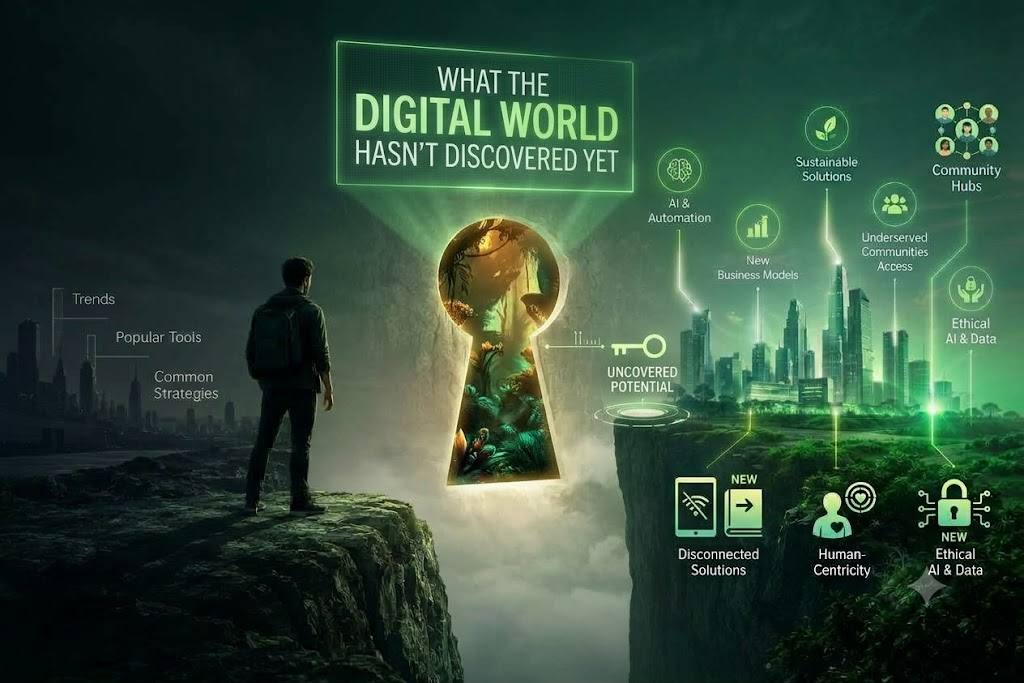
Introduction: A World Full of Hidden Possibilities
The digital world continues to transform how people communicate, learn, work, and conduct business. Every day, new technologies create possibilities that were difficult to imagine just a decade ago. Businesses use digital platforms to reach customers, individuals build careers through online communities, and entrepreneurs develop innovative solutions to everyday problems. However, despite these developments, many valuable opportunities remain unexplored.
The difference between the opportunities technology creates and the opportunities people actually recognise forms what we can call the opportunity gap. This gap exists because people often focus on familiar technologies, established business models, and popular trends instead of examining unmet needs. Therefore, understanding this gap can help individuals and businesses discover new directions for growth. Rather than simply following digital trends, they can identify problems that deserve better solutions and develop strategies that create lasting value.
Understanding the Opportunity Gap: What Does It Really Mean?
The opportunity gap describes the distance between what the digital world makes possible and what people currently understand, access, or use. It does not necessarily refer to a lack of technology. Instead, it often reflects a lack of awareness, creativity, accessibility, or practical implementation. A solution may already exist, yet many people may not know how to use it effectively.
For example, a small business might use social media only to publish promotional images. However, the same platform could help the business understand customer preferences, answer questions, collect feedback, and build long-term relationships. The opportunity does not always require a completely new invention. Sometimes, it emerges when someone uses an existing tool in a more effective way. Consequently, people who recognise overlooked applications can create value without developing entirely new technologies.
The Invisible Barriers: Why Do People Miss Opportunities?
Although the internet provides access to information and tools, it does not automatically help everyone recognise opportunities. One major barrier is familiarity. People often repeat methods that worked previously because those methods feel reliable. While experience can provide useful guidance, excessive dependence on familiar approaches may prevent people from exploring better alternatives.
Another barrier is information overload. Digital platforms constantly introduce new applications, trends, products, and business ideas. As a result, people may struggle to distinguish meaningful developments from temporary excitement. Furthermore, limited digital skills, financial resources, and confidence can discourage individuals from experimenting. To overcome these barriers, people should evaluate real problems, learn continuously, and test new ideas on a manageable scale rather than attempting to follow every trend.
Beyond Artificial Intelligence: Opportunities Hidden in Everyday Problems
Artificial intelligence has attracted considerable attention because it can automate tasks, analyse information, and support decision-making. Nevertheless, the greatest opportunities may not always come from developing another AI tool. They may come from applying existing technology to problems that people experience every day.
Consider local retailers who struggle to maintain accurate product information online, small organisations that need affordable customer support, or independent professionals who spend too much time managing routine administrative work. These challenges may appear ordinary, but they can create opportunities for practical digital services. For instance, a marketer could help a retailer improve online product listings, introduce automated customer enquiries, and organise customer feedback. By concentrating on genuine needs instead of technology alone, entrepreneurs can develop solutions that people are more likely to value.
The Local Digital Divide: Bringing Opportunities to Underserved Communities
Digital innovation often receives attention in major cities and established technology centres. However, smaller towns, rural communities, and local businesses can also benefit from digital transformation. In some areas, people may have internet access but lack the guidance required to use digital tools for education, employment, or business development.
This situation creates opportunities for training providers, consultants, content creators, and technology professionals. For example, a digital marketing specialist could help a local business create a professional website, improve its visibility in search results, and communicate with customers through appropriate online channels. Similarly, educators could develop practical learning resources in regional languages. By adapting digital solutions to local needs, professionals can help communities participate more effectively in the digital economy while building sustainable services of their own.
The Future of Digital Marketing: From Attention to Meaningful Value
Digital marketing has traditionally focused on attracting attention, increasing reach, and generating conversions. These objectives remain important. However, the growing volume of online content makes it increasingly difficult for businesses to stand out through promotional messages alone. Consequently, marketers must look beyond visibility and consider the complete customer experience.
One promising opportunity lies in helping businesses understand why customers choose one brand over another. Marketers can combine customer feedback, search behaviour, website analytics, and campaign performance to identify what audiences genuinely need. Moreover, they can create useful content that answers specific questions instead of publishing material solely to attract clicks. This approach can help businesses build trust and improve their marketing decisions. Ultimately, digital marketing creates greater value when it connects the right audience with a relevant solution rather than simply increasing online activity.
The Creator Economy: Turning Knowledge into Opportunity
The internet has made it easier for individuals to share knowledge, demonstrate expertise, and reach specialised audiences. As a result, people no longer need to rely exclusively on traditional employment structures to explore professional opportunities. They can create educational content, offer consulting services, develop digital products, or build communities around specialised interests.
However, success in the creator economy requires more than regular posting. Creators need a clear purpose, a defined audience, and a consistent way to deliver value. For example, someone with practical knowledge of website development could publish tutorials for beginners and later offer workshops or consulting services. Similarly, a professional with experience in small-business marketing could create resources that help entrepreneurs understand advertising and search engine optimisation. By connecting expertise with a real audience need, creators can transform knowledge into a sustainable professional opportunity.
Responsible Innovation: Why Trust Must Come Before Growth
Although digital technologies offer substantial opportunities, they also create challenges involving privacy, misinformation, cybersecurity, and unequal access. Businesses that pursue growth without considering these issues may damage customer trust and weaken their long-term reputation. Therefore, responsible innovation should form an essential part of every digital strategy.
Organisations can begin by collecting only the information they genuinely need, explaining how they use customer data, and protecting the systems that store it. They should also communicate honestly about the capabilities and limitations of automated tools. In addition, businesses should ensure that their digital services remain accessible to people with different levels of technical knowledge. By placing trust and accountability at the centre of innovation, organisations can create opportunities that benefit both their customers and their long-term business objectives.
Finding the Next Opportunity: A Practical Framework
Discovering an opportunity requires observation, research, and experimentation. Instead of starting with a technology and searching for a reason to use it, individuals should begin by identifying a problem. They can observe customer complaints, examine inefficient processes, speak with potential users, and investigate questions that existing services fail to answer adequately.
Next, they should evaluate whether the problem affects enough people to justify a solution. A simple framework can guide this process:
- Investigate: Research existing solutions and determine what they fail to address.
- Validate: Speak with potential users to understand whether the problem matters to them.
- Experiment: Develop a small, affordable version of the proposed solution.
- Measure: Evaluate user feedback, engagement, costs, and practical results.
- Improve: Refine the solution before investing in wider expansion.
This approach reduces unnecessary risk and encourages evidence-based decisions. Furthermore, it helps entrepreneurs distinguish genuine opportunities from ideas that appear attractive but lack practical demand.
Conclusion: The Future Belongs to Those Who Notice What Others Overlook
The digital world has already changed how society operates, yet its possibilities continue to evolve. New technologies will create additional opportunities, but technology alone will not determine who benefits from them. People must recognise meaningful problems, understand the needs of their audiences, and develop solutions that deliver measurable value.
The opportunity gap reminds us that progress does not always begin with a revolutionary invention. Sometimes, it begins when someone asks a better question, notices an overlooked audience, or applies an existing tool to an unresolved problem. Therefore, individuals and businesses should approach the digital future with curiosity, critical thinking, and a willingness to experiment responsibly.
The next valuable opportunity may not appear in a trending headline or a popular technology announcement. It may exist in an ordinary problem that people have accepted for years without questioning it. By looking beyond familiar patterns and focusing on unmet needs, we can discover possibilities that others have overlooked—and turn those possibilities into meaningful progress.